
In Russia, the escort industry doesn’t operate in the open like it does in some Western cities. There are no neon signs, no licensed agencies on main streets, and no public listings. Instead, it exists in quiet apartments, encrypted messaging apps, and private social media accounts. The women who work in this space aren’t just selling companionship-they’re navigating a system where the law is vague, social stigma is heavy, and survival often means staying invisible. Many of them are young, educated, and from cities like Moscow or St. Petersburg, where rent and basic living costs have outpaced wages for years. Some started as students, others as freelancers after losing jobs during economic downturns. The line between companionship and sex work is legally blurred, and enforcement is inconsistent. One moment, a client might be warned by police; the next, nothing happens at all.
It’s easy to assume this business works like in Paris, where some women advertise openly under the guise of "companion services." For example, you might come across listings for escorte gurl paris-a term used by some agencies to skirt local regulations. But in Russia, even that level of visibility is risky. Posting a photo online, using a recognizable name, or accepting payments through traceable methods can lead to trouble. Many Russian escorts use cash-only transactions, meet in neutral locations like hotels or cafes, and avoid long-term relationships with clients. The goal isn’t romance-it’s safety, payment, and getting out without incident.
Legal Ambiguity: No Law, Just Pressure
Russia doesn’t have a specific law banning prostitution. That’s not because it’s legal-it’s because the government avoids defining it. Instead, authorities use other laws to target the industry. Soliciting in public? That’s an administrative offense under Article 6.11 of the Code of Administrative Offenses. Running an escort service? That’s considered organizing prostitution, which is a criminal offense under Article 240 of the Criminal Code. The punishment? Up to five years in prison. But here’s the catch: the law only applies to the person organizing the activity, not the worker. So if a woman meets a client on her own, she’s technically not breaking the law. But if she uses a website, a phone number, or a third party to find clients, she’s now part of an illegal operation.
This legal gray zone creates a dangerous power imbalance. Clients rarely report abuse because they’re afraid of being charged. Police often demand bribes instead of filing reports. And if a woman is arrested, she’s usually fined and released-with no legal aid, no support system, and no way to challenge the accusation. There’s no NGO in Russia that openly helps sex workers. The closest thing is a small, underground network of volunteers who hand out condoms, provide emergency numbers, and warn women about known predators.
Social Stigma: Invisible But Crushing
Outside the legal system, the real punishment comes from society. In Russia, family honor matters deeply. A woman working as an escort is often cut off from her parents, siblings, and even friends. Many change their names, move to new cities, and destroy old social media profiles. Some tell their families they’re working as models or private tutors. Others disappear completely. The shame isn’t just personal-it’s generational. Children of women in this line of work are often raised by grandparents or placed in foster care, because no one wants to be associated with the stigma.
Even online, the judgment is harsh. Forums where people discuss relationships or dating are full of threads calling Russian escorts "degraded," "desperate," or "tramps." Rarely do people ask why someone ended up in this situation. No one mentions the 2023 study by the Moscow Institute of Social Research that found 68% of women in the escort industry started because they couldn’t pay rent or medical bills. No one talks about how many were forced into debt after taking out loans to fund education or escape abusive homes. The narrative is simple: they chose this. But the truth is more complicated.
How They Find Clients: Apps, Ads, and Word of Mouth
Most Russian escorts don’t use big platforms like those in the U.S. or Europe. Sites like Backpage or Craigslist were shut down years ago, and even Telegram channels get banned quickly. Instead, they rely on three things: personal networks, private Instagram accounts, and word of mouth.
Instagram is the most common tool. Women create accounts with no personal info-no real face, no location, no last name. They post styled photos with vague captions like "traveling soon," "need a friend," or "for those who appreciate elegance." Clients find them through referrals or by searching hashtags like #russiancompanion or #moscowgirl. Once contact is made, they switch to Telegram or WhatsApp. Payments are usually made in cash, sometimes through cryptocurrency if the client is foreign.
Some use classified ads on local forums like Avito or Yula, but these are risky. Posts get flagged within hours. A few still use older methods-posting flyers in expat neighborhoods or leaving numbers in English-language bars in Moscow. One woman told a journalist in 2024 she still gets calls from clients who found her number on a napkin left at a hotel bar in 2021. It’s not glamorous. It’s survival.
The Foreign Client Factor
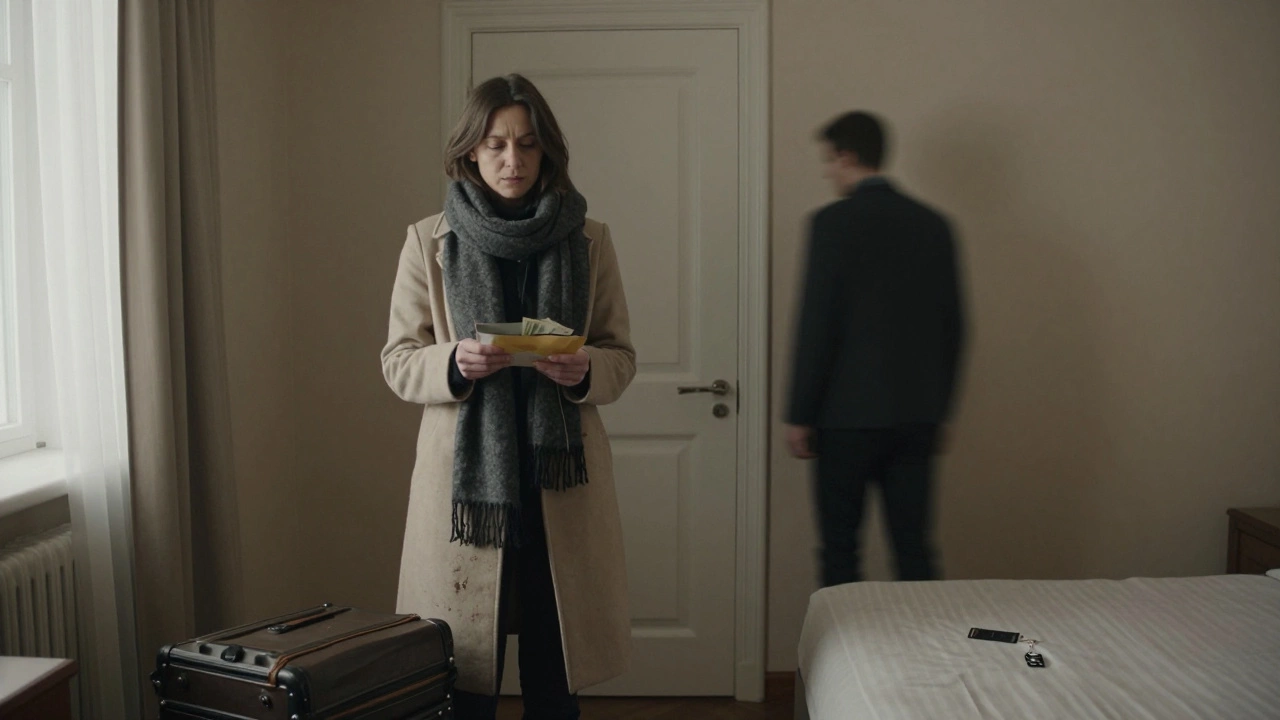
Foreigners make up a large portion of the client base. Many are businessmen, tourists, or expats living in Russia for work. They often assume the rules are looser here, or that Russian women are "more flexible." Some don’t realize they’re breaking Russian law by paying for sexual services-even if the woman isn’t being forced. In 2023, a British tourist was detained in St. Petersburg after a police raid on a private apartment. He spent three weeks in jail before being deported. His escort was never charged.
There’s also a growing trend of Russian women working for clients abroad. Some travel on tourist visas to countries like Turkey, Georgia, or the Czech Republic, where enforcement is weaker. A few even make it to Western Europe, where they’re sometimes mistaken for victims of trafficking-when in reality, they chose this path for better pay. One woman from Novosibirsk moved to Berlin in 2024 and now works under the name "Lena." She sends money home to her younger brother’s medical bills. She doesn’t call herself an escort. She calls herself a freelancer.
What Happens When They Want Out?
Leaving the industry is harder than joining it. Many women have no savings, no job history, and no references. Employers won’t hire someone with a gap in their resume or a history of working in a stigmatized field. Some turn to therapy, but mental health services are expensive and rarely covered by insurance. Others join religious groups or volunteer programs, hoping to rebuild their identity.
A few lucky ones get help from underground networks. One group in Moscow, called "No Labels," offers resume help, basic computer training, and connections to employers who don’t ask questions. They’ve helped about 40 women since 2022. But they operate without funding, without recognition, and without legal protection. If the police find out what they’re doing, they’ll be shut down.
There’s no government program to help women exit the escort industry. No job placement office. No counseling hotline. Just silence.

The Myth of the "Rich Russian Escort"
Media often portrays Russian escorts as glamorous, wealthy, and living in luxury. That’s a fantasy. Most earn between 5,000 and 20,000 rubles per session (about $50-$200 USD). After expenses-rent, transportation, phone bills, security, and bribes-they’re left with maybe 30% of that. Many live in shared apartments, eat simple meals, and avoid buying anything non-essential. The idea that they’re driving luxury cars or wearing designer clothes is mostly from fake Instagram posts.
There are exceptions, of course. A small number of women do build brands, work with photographers, and charge higher rates. But even they live in fear. One woman who went viral on TikTok in 2023 for her "day in the life" video was reported by a viewer. Her account was deleted, her phone was seized, and she was questioned by police for three days. She hasn’t posted since.
There’s also a growing number of women who refuse to be labeled. They don’t want to be called "escorts," "sex workers," or even "prostitutes." They say they’re just people trying to get by. One woman in Yekaterinburg told a reporter: "I don’t sell my body. I sell my time. And if that’s a crime, then so is being a waitress who smiles at customers to get tips."
That perspective is rare in public discourse. But it’s becoming more common among those who live it.
Why This Matters Beyond Russia
The Russian escort industry isn’t just a local issue. It reflects global patterns: economic inequality, gender-based vulnerability, and the failure of laws to protect the most marginalized. When countries criminalize sex work without offering alternatives, they don’t eliminate the trade-they push it underground, where abuse thrives.
Other countries have tried decriminalization. New Zealand, for example, removed criminal penalties for sex work in 2003. Since then, violence against sex workers has dropped, health services have improved, and workers report feeling safer. Russia hasn’t even begun that conversation. And until it does, women will keep working in the shadows, hoping no one finds them.
There’s a strange irony here. The same society that condemns these women also depends on them. Tourists come to Russia for its culture, its history, its beauty-and sometimes, its hidden services. Politicians preach family values while ignoring the real reasons women turn to this work. And the world watches, mostly silent.
It’s not about judging. It’s about seeing. The woman who meets you in a hotel room isn’t a stereotype. She’s someone’s daughter, someone’s sister, someone who just needed to survive. And until we stop pretending the problem doesn’t exist, nothing will change.
For some, the only escape is silence. For others, it’s a single post on a hidden account: "escorte gurl paris"-a reminder that even in isolation, someone else out there understands. Or maybe just wants to be understood.
Another woman, working in a small town near the Ukrainian border, uses the name "paria escor" on her private blog. She doesn’t know why she chose it. Maybe it’s a misspelling. Maybe it’s a code. Maybe it’s the only word she has left that feels like hers.
And somewhere, in a quiet apartment in a city no one talks about, another woman types: "escort girl apris." Then she turns off her phone. For tonight, she’s safe.